
The Kitchen Remodel Game Plan (So You Get the Dream Kitchen Without the “Wait, That’s Extra?” Moment)
Kitchen remodels are exciting. They are also the easiest place for budgets to spiral if the plan is not detailed.

If you have ever heard a friend say, “We started with a simple update and somehow spent double,” this post is your antidote. Let’s walk through a clear, upbeat, no-surprises kitchen remodel game plan you can use before you pick a single tile.
Step 1: Get crystal clear on your “why”
The prettiest kitchen in the world is a flop if it does not solve your daily pain points.
Start with questions like:
Do we need more storage or better storage?
Do we need more prep space?
Are we constantly bumping into each other?
Is the kitchen too dark?
Are we hosting more, cooking more, or trying to simplify?
Write your top 3 goals on paper. Those goals become your filter for every decision.
Step 2: Decide what is changing (layout vs. finishes)
There are two broad types of kitchen remodels:
1) Surface upgradesNew cabinets, counters, backsplash, lighting, and finishes. Layout stays mostly the same.
2) Layout upgradesMoving plumbing, relocating appliances, removing walls, adjusting traffic flow, and changing the way the kitchen functions.
Layout changes can be worth it, but they need more planning because trades, permits, and sequencing become more complex.
Step 3: Build your “selection list” early
One of the biggest reasons kitchen budgets blow up is not fraud or chaos. It is simply missing decisions.
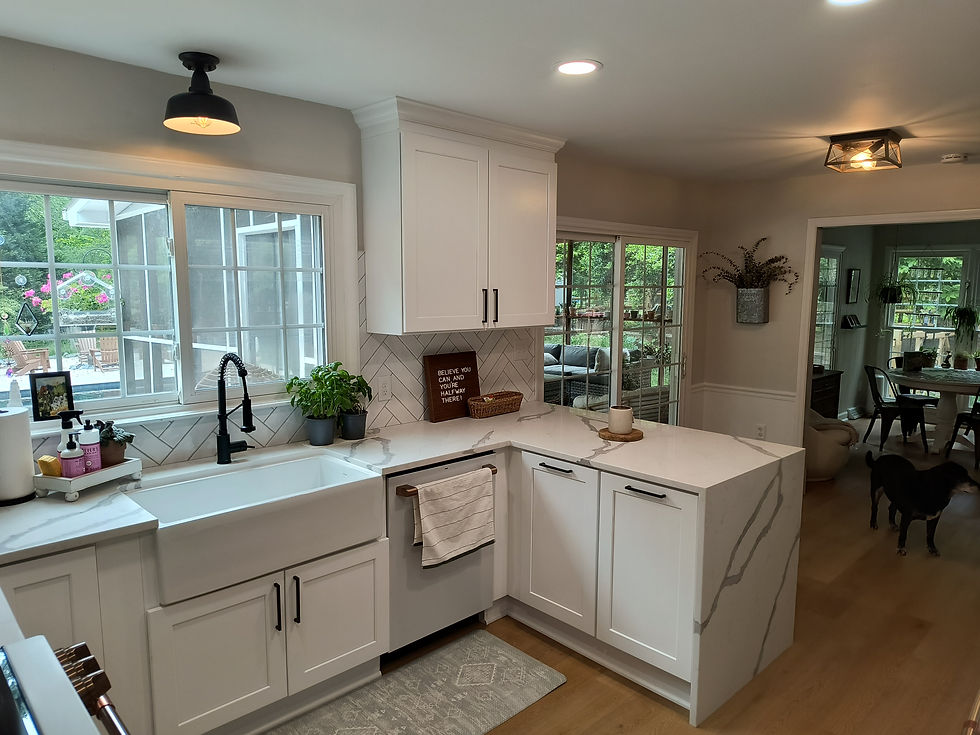
A strong remodel plan accounts for the real list of kitchen components, like:
Cabinet style and construction (custom, semi-custom, stock)
Countertops (quartz, granite, laminate, quartzite)
Sink and faucet
Range hood plan (and venting)
Island layout and electrical
Flooring
Lighting plan (recessed, decorative, under-cabinet)
Backsplash (tile or slab options)
Appliances and specs
Paint and trim
All utilities behind the scenes (plumbing, electrical, ventilation)
This is why we love a preconstruction phase. It is where the money is protected.
Step 4: Understand what is trending, but do not chase it
If you are planning in 2026, you will see certain aesthetics everywhere:
Warm wood cabinetry rising in popularity
Quartz staying dominant as a countertop material
Slab backsplashes becoming more common
Storage features like pantry cabinets and beverage stations gaining priority
Trends are useful when they match your lifestyle. They are expensive when you use them to override good planning.
A simple rule:
Choose timeless for the big-ticket items, and have fun with the easy-to-change details. Cabinets and counters should age well. Lighting and paint can be your personality.
Step 5: Know the phases so you do not panic mid-project
A kitchen remodel has a rhythm. When you know the phases, the experience feels calmer.
A typical build flow looks like:
Protect floors and living areas
Demolition
Rough framing, plumbing, electrical, HVAC
Inspections as needed
Drywall and prep
Cabinets and built-ins
Flooring and tile
Countertops
Plumbing and electrical trim-out
Paint, trim, hardware
Final punch and walkthrough
It is normal for the kitchen to look worse before it looks better. The “ugly middle” is a real thing. The difference between a stressful project and a smooth one is how well it was planned before demo begins.
Step 6: Budget smart, not scary
A better budget is not just a number. It is a plan.
Three tips we give homeowners constantly:
Budget for reality, not the dream mood board.
Account for unknowns in older homes.
Keep your priorities tight, so you can splurge where it matters.
If you want a statement countertop, cool. Then maybe we keep the cabinet door style classic and put money into lighting and storage.
Step 7: Choose the contractor who spells it out
The best kitchens are built on clarity, not charm.
A contractor who protects your budget will:
Provide a detailed scope
Walk the quote with you line by line
Clarify allowances and selections
Identify what is included and what is not
Explain timeline and sequencing
Communicate consistently
This is exactly why Privent Construction educates clients early. It prevents the low-bid trap where “cheap” turns into “expensive” later.
Your next step: a kitchen consult that feels organized
If you are even thinking about a kitchen remodel this year, the smartest move is a consultation that maps out your options, confirms what is possible structurally, and creates a clear pricing plan.
Schedule a free design consultation with Privent Construction.
Call (704) 756-5568 or email info@priventconstruction.com.

Comments